A visual essay / Kampala, June 10, 2026

After the award.

After award, the record thins. The risk does not. A road, a school, a bridge, a hospital keeps living past the contract: that is where money is spent, risks emerge, delays happen, safeguards matter, and citizens feel the result.

Publish it. Link it. Use it. Improve it.

Uganda's upgraded GPP PPDA · AFIC · CoST Promise to public value
scroll
The black hole after award

The record thins exactly where the risk grows.

The timeline runs clean to award. Then it falls into a dark hole: implementation, cost variations, a delayed completion, safeguards, a community complaint. The money moves and the risk peaks here, with the least data of anywhere in the project.

Most procurement records stop at award. Infrastructure does not.

The old GPP, important but incomplete

The portal already made procurement visible.

Uganda's GPP already made the procurement events visible: planning, bid, evaluation, award. Real foundation. But accountability needed the years after the signature, not just the moment of it.

Bright up to award. Faded after it.

AFIC, with CoST funding, supported PPDA to redesign the GPP and align it to open contracting; CoST notes the portal incorporated the Open Contracting for Infrastructure Data Standard.

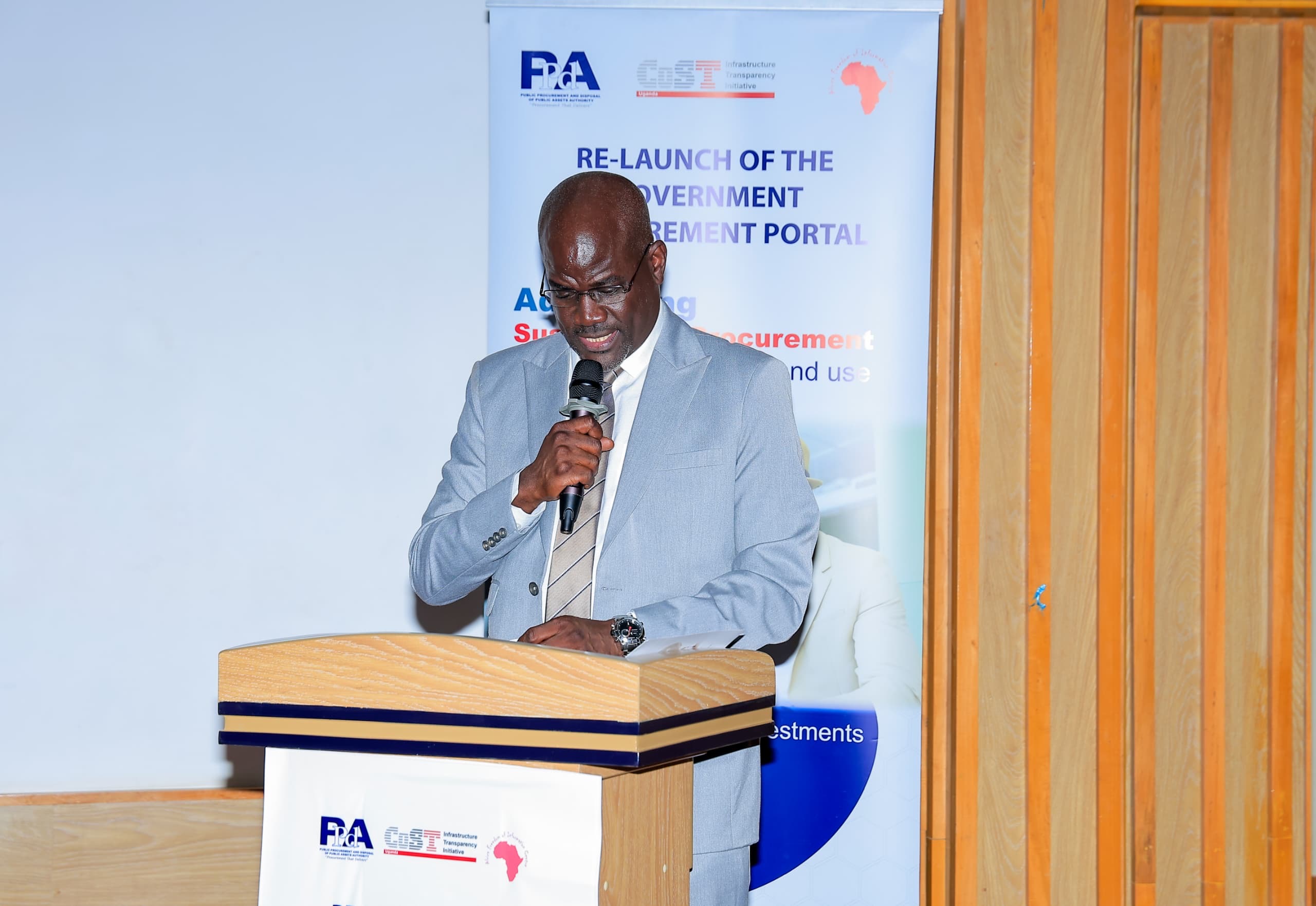
A speaker addresses the relaunch of the Government Procurement Portal at the PPDA offices in Kampala, standing at a podium beside a banner reading RE-LAUNCH OF THE GOVERNMENT PROCUREMENT PORTAL.
The room where the gap was named

Not just a portal launch. A decision to make infrastructure traceable.

At the PPDA offices in Kampala, government, PPDA, AFIC, CoST, development partners, procuring entities, civil society, the private sector, and media gathered around one question: how do we make public infrastructure visible across its full life?

The June 10, 2026 relaunch of the Data Publication Portal on Uganda's GPP was reported as a milestone delivered by PPDA and AFIC, with CoST support, for procurement transparency, oversight, citizen participation, and value for money.

The through-line

You cannot track what you cannot link. You cannot improve what you cannot measure.

Open data is not the act of publishing. It is the discipline of making public projects traceable, usable, and accountable from promise to public value.

Infrastructure as a living thing

A project has a life. The data must follow it.

Planned, procured, built, completed, maintained, then retired. One asset, six stages, one data line. The upgrade matters because it moves disclosure past award, into the years the old record left dark.

Six stages. One continuous line.

The reported upgrade adds lifecycle stages such as maintenance and decommissioning, closing the gap between contract records and the real life of public assets.

Not a new machine. A stronger engine.

An upgrade to see the whole project.

Not a relaunch from zero. The working GPP engine has been fitted to carry what accountability needs after award: project-level data, sustainability, maintenance, decommissioning, use. A turbocharger, not a replacement.

Not a relaunch from zero. An upgrade to see the whole project.

Michael Cengkuru presenting at the GPP relaunch, holding a presentation clicker and microphone, mid-gesture.
Built with the users, not thrown at them

Do not boil the ocean. Prioritise the data that makes oversight possible.

It was mapped with the people expected to publish, not pushed onto them. Of 78 indicators under the new standard, 36 were prioritised first, the ones that make oversight possible.

Compliance fails when systems ignore real procurement workflows. The relaunch was reported as integrating 36 of 78 indicators under the new CoST sustainability standard.

A speaker at the podium beside a banner reading Advancing Sustainable Procurement Through Data Access and Use, listing Public Infrastructure, Contracts, and Climate Finance.
Sustainability enters the record

Sustainability is not a slogan. It is data that must be reported.

Climate, social safeguards, health and safety, economic value, governance. The standard turns each layer from a promise into a reported field.

The 36 prioritised indicators include climate finance, environmental, social, and health-and-safety (ESHS) safeguards, and economic and institutional indicators, per the reported relaunch.

The portal is only half the story

Unused data is storage, not accountability.

Government uploads the data, and too often it sits still. A portal no one queries is a warehouse. Publishing is the obligation; use is the test.

Publishing is the first step. Use is the test.

The other half: use

The data has to move into hands.

Once it moves, the record comes alive: a PPDA analyst, a journalist, a civil-society monitor, a private-sector bidder, a citizen. Each queries it, finds something, and feeds evidence back. Government publishes. Everyone else uses, and returns what they find.

Publish it. Link it. Use it. Improve it.

The strongest user-side message from the launch: government publishes, but oversight bodies, civil society, the private sector, media, and citizens must use the data and feed evidence back.

A woman in the audience stands with a microphone, asking a question during the relaunch, in a blue auditorium.
What data use actually changes

The point is not more data. The point is earlier correction.

A delay caught before the stall. A cost variation flagged before it is paid. A safety gap surfaced. A finished road handed a maintenance schedule instead of silent decay.

The questions from the room are the system already starting to work: oversight as a live act, not a ceremony.

Live portal · what the data already shows

Run one query. The market answers back.

This is not hypothetical. On the upgraded portal's competition view, a single ratio already names a risk worth investigating: how many "competitive" tenders attract only one bidder.

28.5%
of competitive tenders attract only ONE bidder (of 541)
3.6
average bidders per tender
543
tenders / invitations to bid
UGX 4.0T
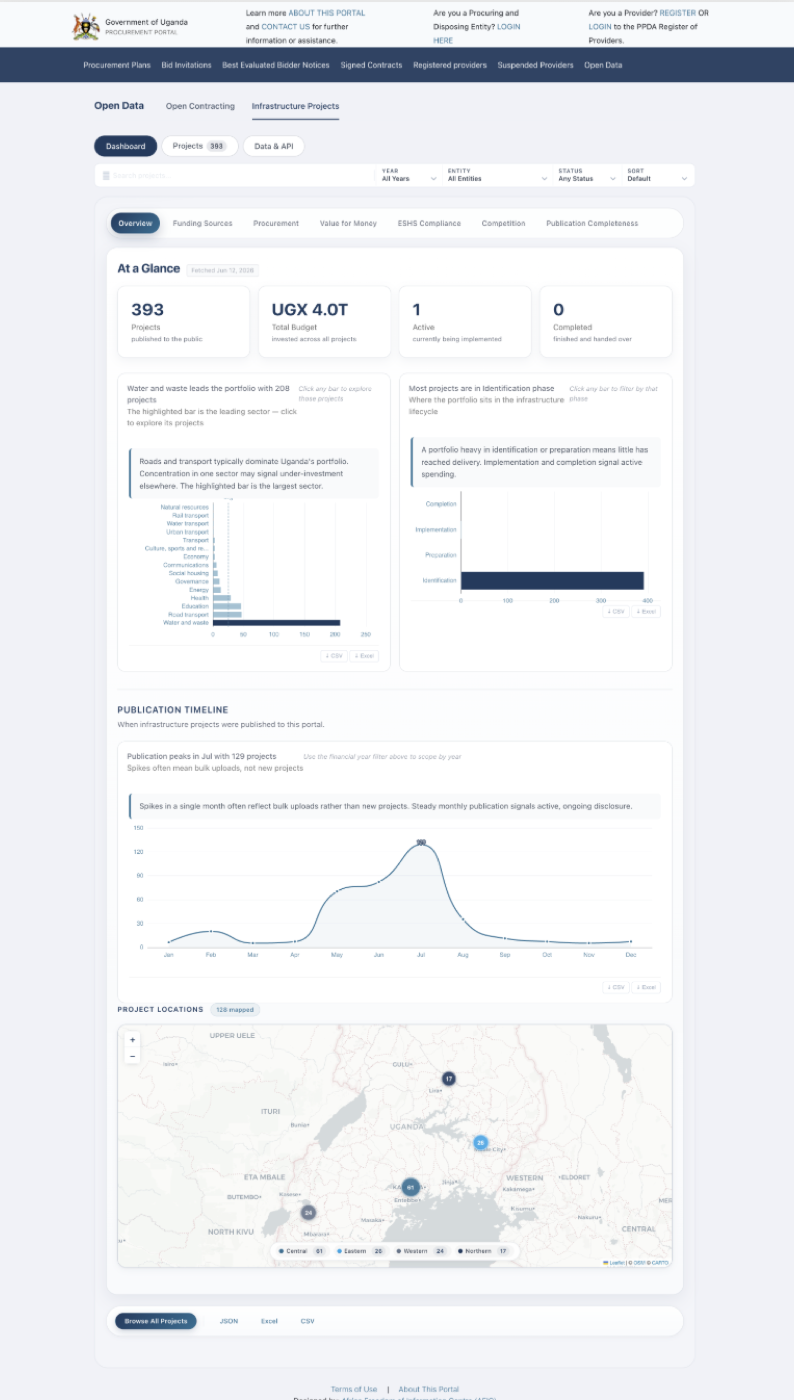
budget across 393 published projects
What a citizen, journalist, or PDE asks next

When only one company bids, there is no price competition, and government may be paying above market. Which entities, and which projects, sit behind that 28.5%?

Screenshot of the GPP infrastructure dashboard Competition tab showing 543 tenders, 28.5 percent single-bid tenders, 3.6 average bidders, 0 direct awards, and a chart of how many tenders attract only one bidder.

GPP infrastructure dashboard, Competition view. The amber segment is the single-bidder problem: tenders with no, one, or no genuine price competition.

Source: GPP infrastructure dashboard, figures as published June 2026. A single-bid rate is a risk flag, not proof of wrongdoing: it shows where oversight should look first. The same query recomputes every month, which is the point: a standing check, not a one-off story.

Four blind spots the data can close.

Not ideology. Everyday corrections that only happen when someone is looking at the record.

01 . Delay

Spotted before the stall

A timeline turns red while there is still time to intervene, not after the project has quietly missed its date.

02 . Cost variation

Flagged for review

A budget bar moves and triggers a check, before the change order is paid rather than after the money is gone.

03 . Safety gap

Made visible

A health-and-safety indicator appears in the record, so an ESHS gap is a data point, not an accident waiting.

04 . Maintenance

Planned, not assumed

A completed road gets a maintenance schedule attached to its record instead of being left to silent decay.

Uganda as a signal, not a victory lap

Setting the bar means carrying the burden.

Regional leadership will not be judged by the launch. It will be judged by monthly disclosure rates, field completeness, data quality, and evidence of use.

Group photograph of stakeholders at the GPP relaunch, seated and standing in front of an Infrastructure Transparency Initiative banner.
The commitment moment

A commitment without follow-through is theatre.

"We commit to using the upgraded GPP to strengthen infrastructure transparency and accountability through the publication of sustainable infrastructure data."

This is not a ceremonial close. It is a public record. A commitment backed by disclosure, analytics, feedback, and enforcement becomes governance.

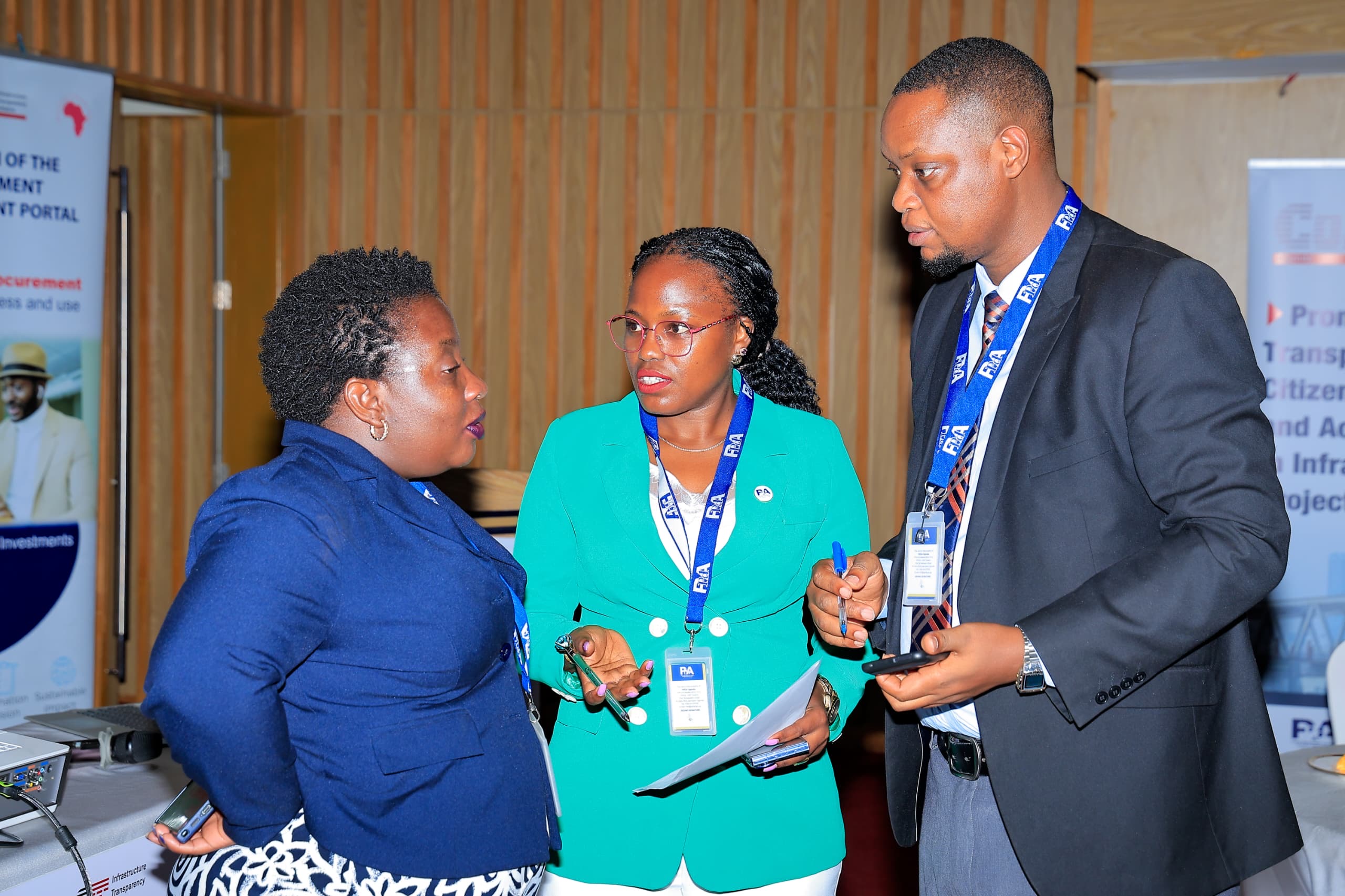
Three people in a candid side conversation after the event, one holding a phone, beside a portal banner.
The human proof after the ceremony

The real work starts when the room empties.

In the hallway afterward, someone says they entered the information, but it is not showing correctly. That sentence is the truth of every data system: the launch is the easy part. The hard part is monthly disclosure, technical support, quality checks, and feedback loops.

A broken data line is the most honest image in this essay. The reform is not the portal. The reform is the behaviour around the portal: whether the line gets repaired when it breaks.

The closing image, public value

The public pays for infrastructure twice: first with money, then with trust. Data protects both.

The upgraded GPP does not create accountability. It makes accountability possible, by making the whole project lifecycle visible. The test is whether agencies publish complete data every month, and whether oversight actors use it to force correction.

The portal is the tool. The behaviour around it is the reform.

Method & sources

A documentary visual essay built on photographs from the June 10, 2026 relaunch of the Data Publication Portal on Uganda's Government Procurement Portal, plus one real screenshot and live figures from the portal's infrastructure dashboard. The institutional facts below are drawn from public reporting and standards documentation. Other illustrations are house-style diagrams, and the data line is an editorial device.

What is reported
  • The relaunch was reported as a milestone delivered by PPDA and AFIC, with CoST support (CoST funded AFIC's role), for transparency, accountability, citizen participation, and value for money in public procurement.
  • The upgrade adds lifecycle stages such as maintenance and decommissioning, and integrates 36 of 78 indicators under the new CoST sustainability standard (climate finance, environmental, social, and health-and-safety safeguards, economic and institutional indicators). Source: Shift Media News, June 2026.
  • The competition figures (543 tenders, 28.5% single-bid, 3.6 average bidders, 393 projects, UGX 4.0T) are read directly from the live GPP infrastructure dashboard, June 2026, not from the event audio.
Standards & institutions
  • OC4IDS: the full-lifecycle infrastructure record. CoST notes Uganda's GPP incorporated the Open Contracting for Infrastructure Data Standard; disclosure should cover purpose, scope, cost, and execution in a timely way.
  • AFIC (Africa Freedom of Information Centre), with CoST (Infrastructure Transparency Initiative) funding, supported PPDA to redesign the GPP for disclosure, monitoring, analysis, dashboards, and reuse of procurement data.
  • Live portal: gpp.ppda.go.ug, the infrastructure data dashboard this essay is about.
What is editorial
  • The data line: a single device that runs unbroken when the lifecycle is visible and breaks when accountability fails. It is a metaphor, not a portal feature.
  • The black hole after award, the engine-and-turbo diagram, and the four case cards are illustrations of the argument, not depictions of specific Ugandan contracts.
  • The portal evidence scene is the exception: those numbers and that screenshot are real, taken from the live dashboard. The single-bid rate is a risk flag, not a finding of wrongdoing.
  • Photographs are lightly desaturated for one consistent grammar; no faces or quotes are attributed beyond what the reporting supports.

The honest claim, stated plainly: the upgraded GPP makes the whole life of a project disclosable. It does not, by itself, make projects accountable. Accountability needs agencies to publish on a cadence, and citizens, regulators, media, civil society, and the private sector to use the data and feed evidence back. The portal is the tool. The behaviour around it is the reform.

A visual essay by Michael Cengkuru · cengkuru.com
Institutional facts verified against public reporting of the June 10, 2026 relaunch and OC4IDS / CoST documentation, June 2026.
Built as a self-contained page: no framework, no tracking, no third-party scripts.

← All essays