I build disclosure systems that survive after launch.
I work with governments, transparency initiatives, and implementation
teams to turn procurement, infrastructure, ownership, and extractives
records into standards-compliant data pipelines that can be published,
tested, reused, and kept current long after the launch event is over.
The output is decision infrastructure: evidence flows, publication
gates, audit trails, and red-flag triage an institution can run without me.
Standards mapped. Systems wired. Capability transferred.
100,000+contracts published through Uganda’s national portal
1,496infrastructure projects disclosed in Kaduna State, with cost and timeline
7country systems, procurement and infrastructure
2015to present, still building and maintaining
OC4IDS · OCDS · BODS · EITIstandards translated into working pipelines
Disclosure without verification is performance.
Data without accountability is noise
I work in the gap between those two failures: I map the standard, wire
the system, and transfer the routine into the institution that has to
keep it alive.
Start where it is failing
Where is your disclosure system failing?
Most transparency systems do not fail loudly. They go stale, fall out of
the standard, or lose the person who kept them running. Find the symptom
you recognise.
01
The data does not validate
The records exist, but they do not map cleanly to OC4IDS, OCDS, BODS,
EITI, or the disclosure requirement you are accountable to.
Service Standards mapping and validation review
02
The portal is online but stale
The website is up. The pipeline is not. Updates depend on manual
uploads, heroic staff, or a consultant who has already left.
Service Publication pipeline and portal recovery
03
The dashboard shows activity, not accountability
Users can see charts, but cannot answer whether the project was
delivered, delayed, overpriced, conflicted, or abandoned.
Service Oversight and reuse layer
04
The record stops at the award
Procurement data says who won. It does not show whether the road,
clinic, school, or power line was ever built.
Service Procurement-to-delivery linkage, OC4IDS
05
The team was trained, but capability did not transfer
People attended the workshop. They still cannot run the routine inside
their own workflow, with their own records.
Service Institutional capability clinics
What I build or fix
What you can engage me to do.
Decision infrastructure diagnostic
Use when
Your portal, dataset, disclosure programme, or AI pilot exists, but nobody can act on what it produces.
What I do
Audit the source records, standard mapping, publication workflow, validation layer, freshness, ownership, and the tasks real users need it for.
You leave with
An evidence-flow map, a publication-gate audit, an audit-trail gap map, a red-flag triage design, an owner-handover plan, and an implementation backlog.
Receipt The model behind my essay “Why disclosure portals die” is this exact diagnosis.
Standards mapping and validation review
Use when
You need procurement, infrastructure, ownership, or extractives records mapped to OC4IDS, OCDS, BODS, EITI, or an adjacent standard.
What I do
Field-level mapping, schema review, gap analysis, codelist alignment, cross-standard harmonisation, and validation logic.
You leave with
A standards-compliant mapping pack, validation findings, publication requirements, and an implementation backlog.
Receipt Deepest OC4IDS field-level mapping reviews across CoST member countries.
Publication pipeline and portal recovery
Use when
The portal exists but depends on manual uploads, stale extracts, inconsistent records, or unclear ownership.
What I do
Design or repair the data model, publication layer, API approach, validation routines, freshness signals, and recovery roadmap.
You leave with
A working publication architecture, data-flow design, validation routine, dashboard logic, and a maintenance plan.
Receipt Kaduna State, Nigeria: 1,496 infrastructure projects published with cost, timeline, and completion data.
Oversight and reuse layer
Use when
You publish data, but it does not yet support oversight, assurance, journalism, citizen monitoring, or internal decisions.
What I do
Design dashboards, red-flag logic, anomaly signals, quality indicators, and the public-use questions the system should answer.
You leave with
A set of accountable questions the system can answer, the data fields required to answer them, and the layer that surfaces them.
Receipt The work is not dashboards; it is records that answer a citizen, auditor, or engineer’s question.
Institutional capability clinics
Use when
The system is built, but a government team needs to operate it with their actual records and decisions.
What I do
Hands-on clinics using the institution’s own data, publication routines, quality checks, and oversight workflows.
You leave with
Staff who can run the routine, documented governance, quality checks, and a repeatable publication practice.
Receipt Kampala: 143 procurement officers, and one real question that broke a year-old design assumption.
The method underneath
Standard. System. Capability.
Whatever the symptom, every engagement resolves the same questions.
01
Standard
What should the record mean? Procurement to OCDS or OC4IDS, extractives
to EITI, ownership to BODS. The work is the same: make the data
comparable, publishable, and verifiable against a public definition.
Field-level mapping and gap analysis
Cross-standard migration and harmonisation
Validation, quality assurance, and review
Working with the schema, not around it
02
System
How does the record move, validate, publish, and stay fresh? The
publication and oversight layer that turns a standard into a working
asset. A portal is just one of its surfaces.
Publication layer, API, validation
Oversight dashboards and red-flag logic
Freshness, quality, and integrity signals
Recovery roadmap for stalled systems
03
Capability
Who inside the institution can keep the routine alive? Capability work
transfers the practice into the team, their data, their workflows,
their decisions. I leave the institution stronger, not more dependent.
Implementation training for government teams
Using disclosure data for oversight
Data-quality routines and publication governance
Hands-on clinics with the institution’s records
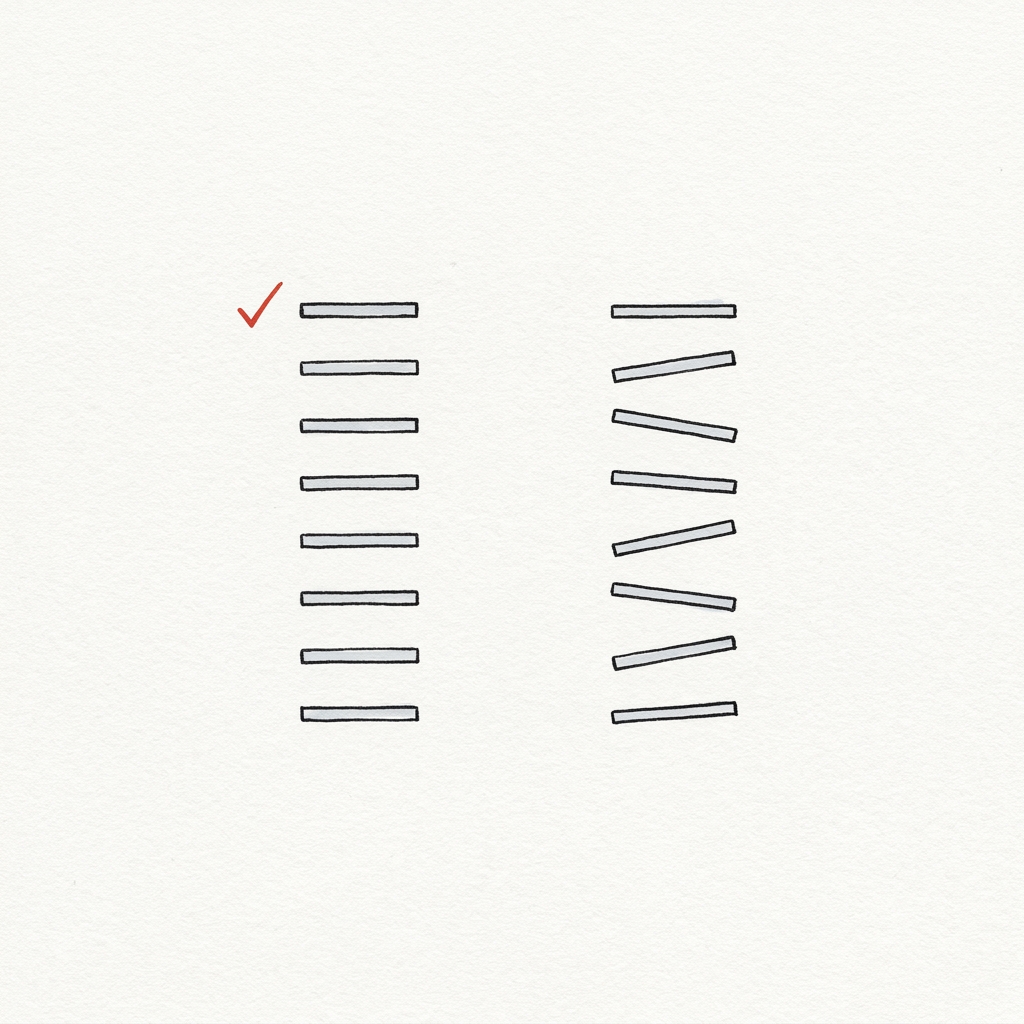
Same count.
One verified.
Two columns, same count. Only one was checked.
Proof, attached
Where the work has held.
Uganda · National procurement disclosure
Started as a developer in 2015. The national portal now publishes more
than 100,000 contracts, and is still live.
Lead architect · since 2015
Kaduna State, Nigeria · Infrastructure disclosure
1,496 infrastructure projects published with cost, timeline, and
completion data, mapped to OC4IDS.
OC4IDS implementation · 2021 to 2023
CoST member countries · OC4IDS mapping
Field-level mapping and validation reviews across infrastructure
transparency systems, the deepest application of the practice.
Standards lead
Kampala · Capability transfer
Trained 143 procurement officers. One officer’s question exposed
the gap between launch, use, and data quality, and changed the design.
Implementation training
Have a portal, dataset, or standard mapping that is not holding? Send it.
South SudanTechnical assistance · National procurement
2024, present
Standardfield-level mapping
Systemworking portal
Capabilitytransferred to team
Activestill running
Years are engagement spans, not contract dates. Bars marked “present” are still active.
No pitch deck. Bring the record.
Send the portal, dataset, standard, or workflow you are trying to fix, and
one question the system should answer. I will tell you where the failure
most likely is: the standard, the pipeline, the validation layer, or the
institutional routine.